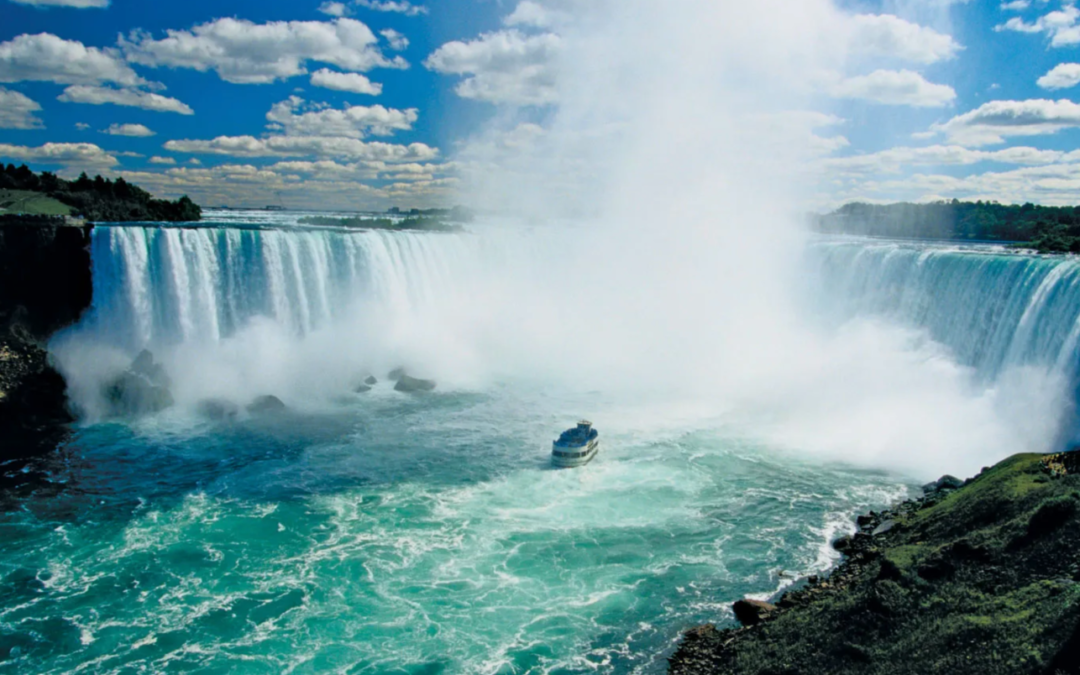
Niagara Falls is a year-round destination with each season offering unique experiences. As your trusted travel advisor, we’ve helped clients find the perfect time to visit this iconic site. Whether you’re seeking adventure, romance, or a family getaway, here’s everything you need to know about timing your trip to Niagara Falls.
Spring (March – May): A Time of Renewal
Spring is a fantastic time to visit Niagara Falls if you’re looking for fewer crowds and lower accommodation prices. The falls come alive as the snow melts, and the surrounding parks begin to bloom. While temperatures can still be chilly in March, by April and May, the weather becomes more comfortable, making it ideal for exploring the area’s scenic trails.
Pros:
• Fewer tourists, leading to shorter wait times at attractions.
• Springtime blossoms and greenery in Niagara Parks.
• Lower hotel rates compared to peak season.
Cons:
• Some attractions, such as the Maid of the Mist boat tour, may have delayed openings due to weather.
Summer (June – August): Peak Season Magic
Summer is undeniably the most popular time to visit Niagara Falls. With warm weather and nearly all attractions in full swing, it’s the perfect time for families and adventure seekers. From boat tours that take you close to the thundering falls to helicopter rides and evening fireworks, summer offers endless activities.
Pros:
• All major attractions are open and accessible.
• Plenty of family-friendly activities and entertainment.
• The opportunity to witness the falls lit up at night with fireworks displays.
Cons:
• Higher prices for accommodations and tours.
• Crowded attractions, especially during weekends and holidays.
Fall (September – November): Nature’s Spectacle
If you prefer to avoid the summer rush but still want pleasant weather, fall is an excellent time to visit Niagara Falls. September and October bring cooler temperatures and stunning fall foliage, creating a picturesque backdrop for your trip. Many of the summer attractions remain open until October, giving you plenty of options without the peak-season crowds.
Pros:
• Gorgeous fall foliage enhances the scenic beauty.
• Mild weather perfect for hiking and outdoor activities.
• Lower prices and fewer crowds compared to summer.
Cons:
• Some attractions may start to close by late October.
• Cooler temperatures in November can make outdoor activities less enjoyable.
Winter (December – February): A Winter Wonderland
For those seeking a unique and quieter experience, winter at Niagara Falls offers a serene beauty that few travelers get to witness. The falls partially freeze, creating stunning ice formations, and the surrounding area transforms into a winter wonderland. Although some attractions may be closed, there are still opportunities for indoor fun, like visiting the Fallsview Casino or exploring the local wineries.
Pros:
• Fewer tourists, offering a peaceful experience.
• The chance to see the falls in a magical winter setting.
• Great deals on accommodations.
Cons:
• Many outdoor attractions are closed for the season.
• Cold temperatures may limit outdoor activities.
Conclusion: The Best Time for You
The best time to visit Niagara Falls depends on what kind of experience you’re looking for. If you’re after adventure and don’t mind the crowds, summer is ideal. For those seeking serenity, spring and fall provide a quieter and equally beautiful alternative. And if you want to see the falls in a way few do, consider a winter escape.
No matter when you choose to visit, Niagara Falls promises unforgettable memories. Reach out to us at Dapper Dreams Travel, and we’ll help you plan the perfect trip at the perfect time!