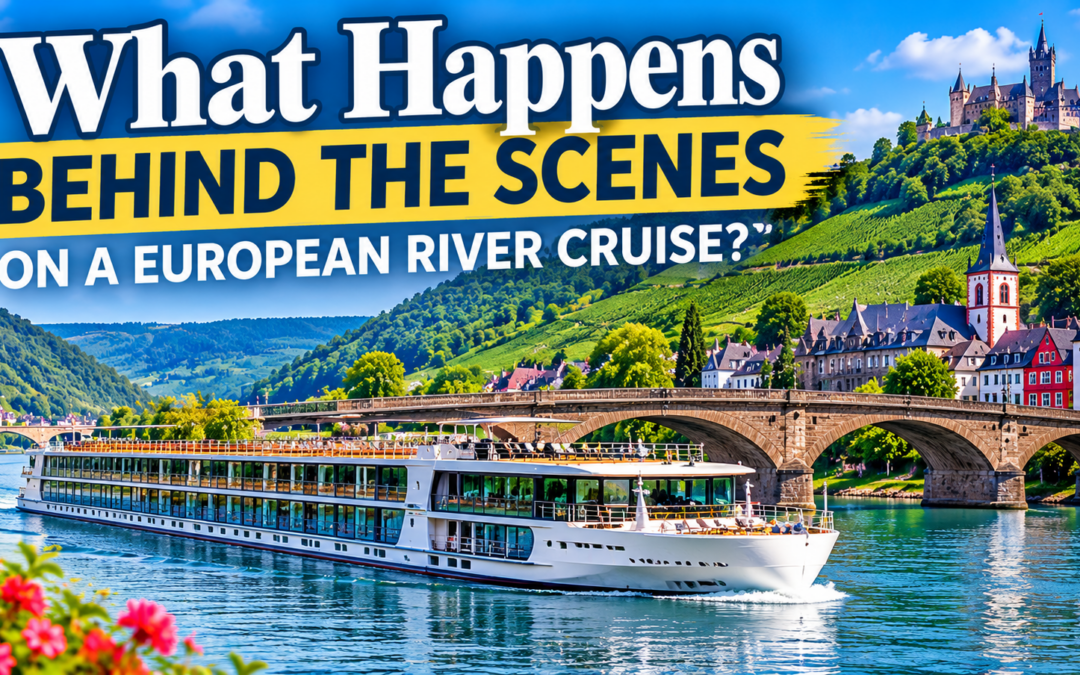
The fascinating engineering, navigation, and logistics that make Europe’s river journeys possible.
A European river cruise offers an extraordinary way to experience the continent. One morning, you might wake up alongside a medieval German town. The next, you’re sailing past terraced vineyards, ancient castles, or the grand architecture of a European capital.
From the comfort of your stateroom, it can all seem wonderfully simple. You unpack once, enjoy your meals, explore fascinating destinations, and watch Europe unfold just beyond your window.
But behind that relaxing experience is a remarkable combination of engineering, navigation, logistics, and careful coordination.
How does a river cruise ship climb uphill? Why would a captain lower the ship’s wheelhouse into the deck? And why might you occasionally have to walk through another cruise ship just to reach shore?
Let’s explore some of the fascinating things happening behind the scenes on a European river cruise.
1. Navigating Europe’s Rivers: A Different Kind of Cruising
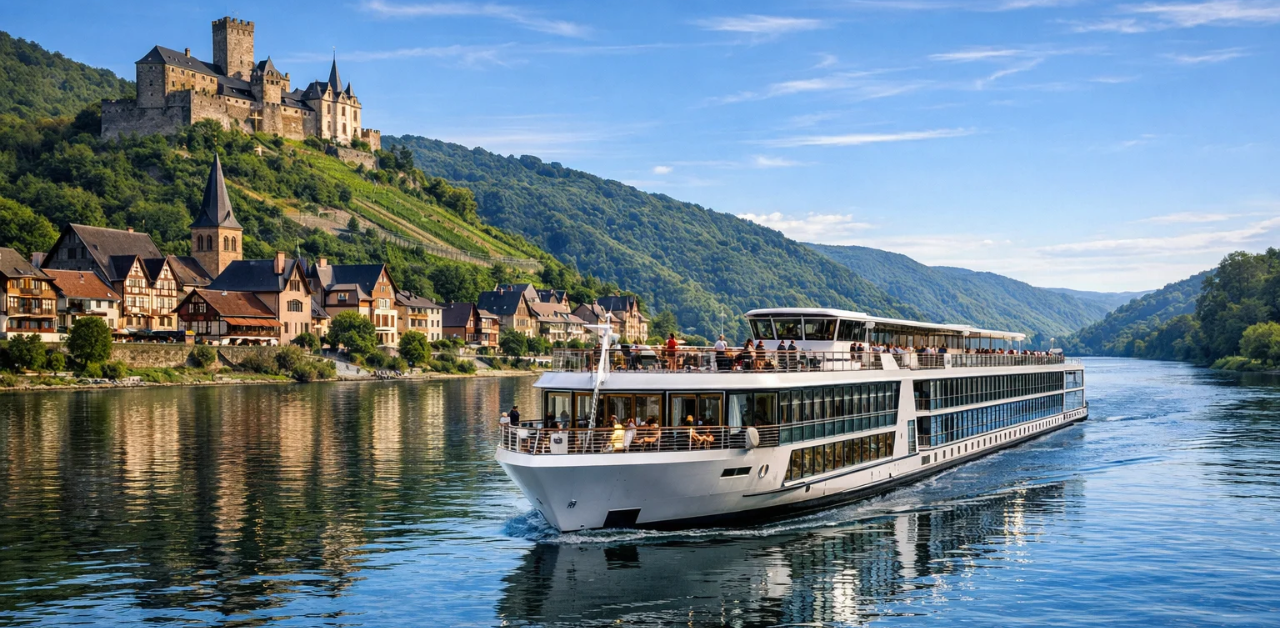
A modern European river cruise ship can stretch more than 400 feet in length, yet it must navigate waterways that are dramatically different from the open ocean.
Unlike ocean cruise ships, which often have miles of open water around them, river vessels operate within defined channels. Their captains must account for changing currents, shallow areas, narrow bends, commercial shipping traffic, and sometimes very limited room to maneuver.
On rivers such as the Rhine, passenger vessels share the waterway with commercial barges carrying everything from fuel and construction materials to agricultural products and manufactured goods. River cruising is part of a much larger transportation network that operates around the clock.
Water depth is another critical consideration.
River cruise ships are designed with relatively shallow drafts, allowing them to navigate waterways that would be impossible for most ocean-going vessels. Even so, seasonal fluctuations in river levels can affect which sections of a river remain safely navigable.
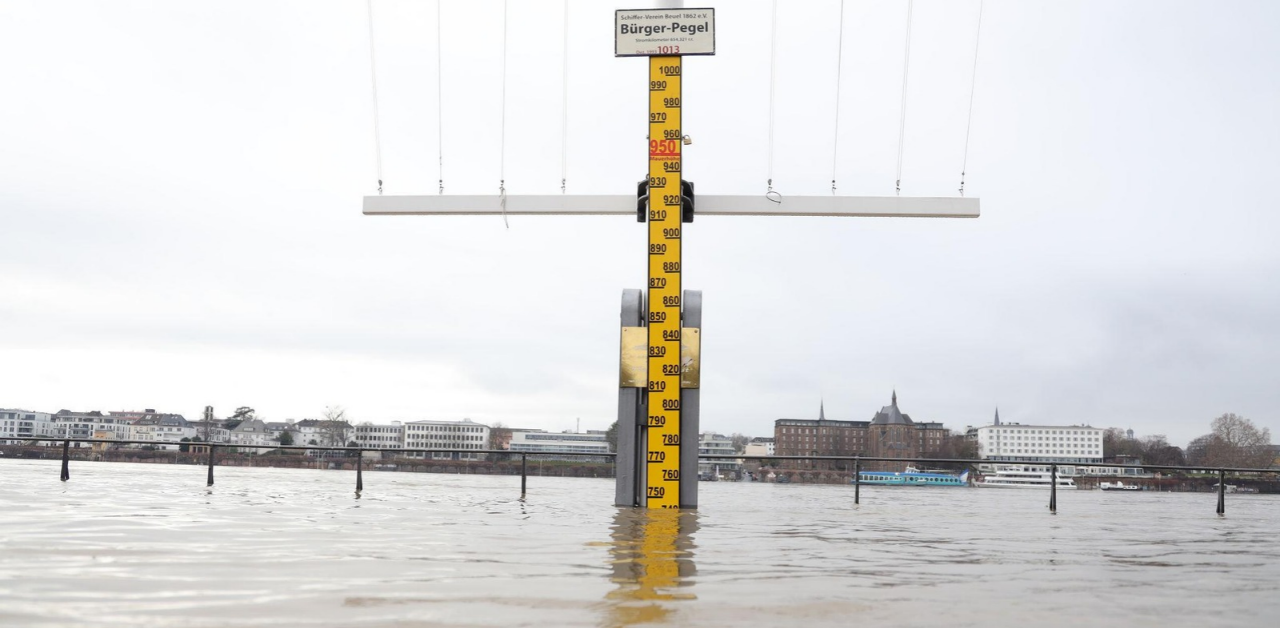
Captains rely on detailed navigation information, river gauges, electronic charts, radar, and their knowledge of local conditions to make safe operating decisions.
And while a river cruise ship may look enormous when you’re standing beside it, its maneuvering capabilities can be surprisingly impressive.
Depending on the vessel, bow thrusters, rudders, and specialized propulsion systems help captains maneuver in confined spaces. Some modern vessels have steerable propulsion units that provide particularly precise control at low speeds.
It’s an impressive display of seamanship that most passengers never need to think about.
2. River Locks: How Ships Climb and Descend Through Europe
Here’s a fascinating question: How does a river cruise ship travel uphill?
The answer is river locks.
Europe’s rivers don’t all flow at the same elevation. As ships travel inland, they may need to overcome significant changes in water level, particularly along canal systems connecting major rivers.
Locks make that possible.
Think of a lock as an enormous water-filled elevator designed for ships.
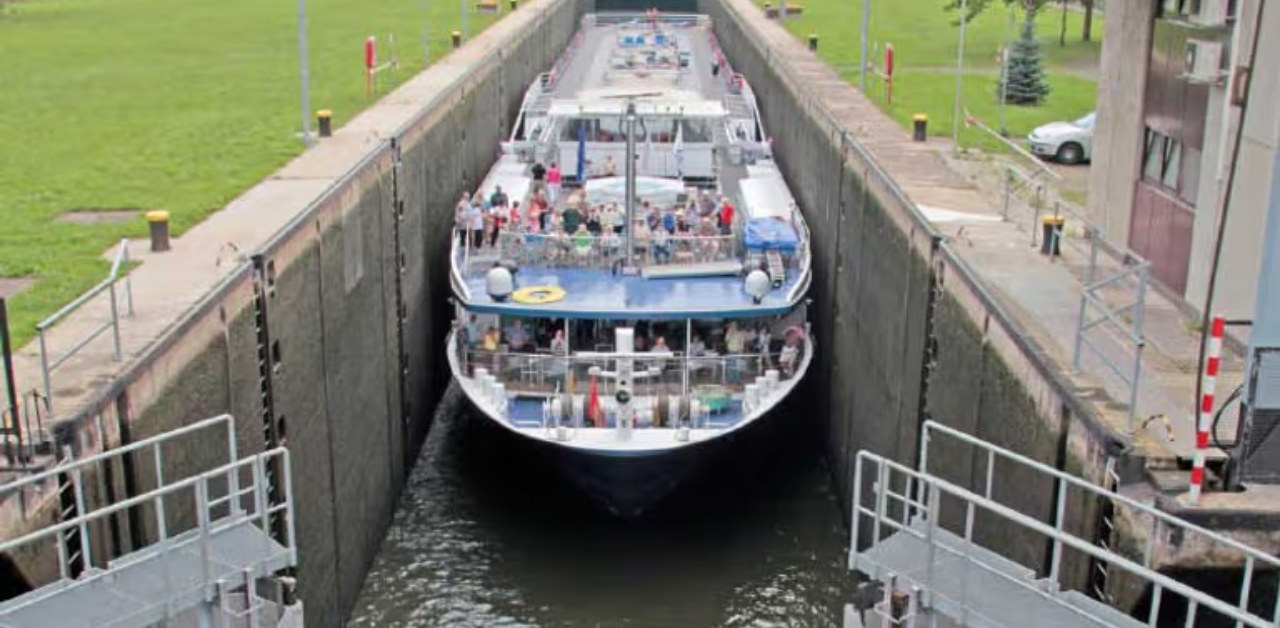
When a vessel needs to travel upstream, it enters a chamber enclosed by gates. Once the gates close, water is introduced into the chamber, gradually raising the ship until the water level matches the next section of the waterway.
The opposite happens when traveling downstream. Water is released from the chamber, lowering the ship before the gates open.
The entire vessel rises or falls while remaining afloat.
One of Europe’s most remarkable examples is the Main-Danube Canal in Germany, which connects the Main River system with the Danube.
The canal crosses the European watershed, and its locks allow vessels to travel between two major river basins that ultimately drain into different seas.
Some locks along this route raise or lower ships by approximately 80 feet in a single chamber.
Imagine standing on the sun deck and watching the concrete walls of a lock tower above you as your ship slowly rises toward the next stretch of water.
Depending on the lock, water levels, and operating conditions, the process can take a substantial amount of time. Captains must also coordinate with lock operators and other commercial vessels using the waterway.
For passengers, watching a ship enter a lock with seemingly inches of room on either side can be one of the most memorable experiences of the entire cruise.
3. Low Bridges and Retractable Wheelhouses
European river cruise ships face another unusual challenge: Bridges.
Many of Europe’s waterways pass beneath bridges built long before modern river cruise ships existed.
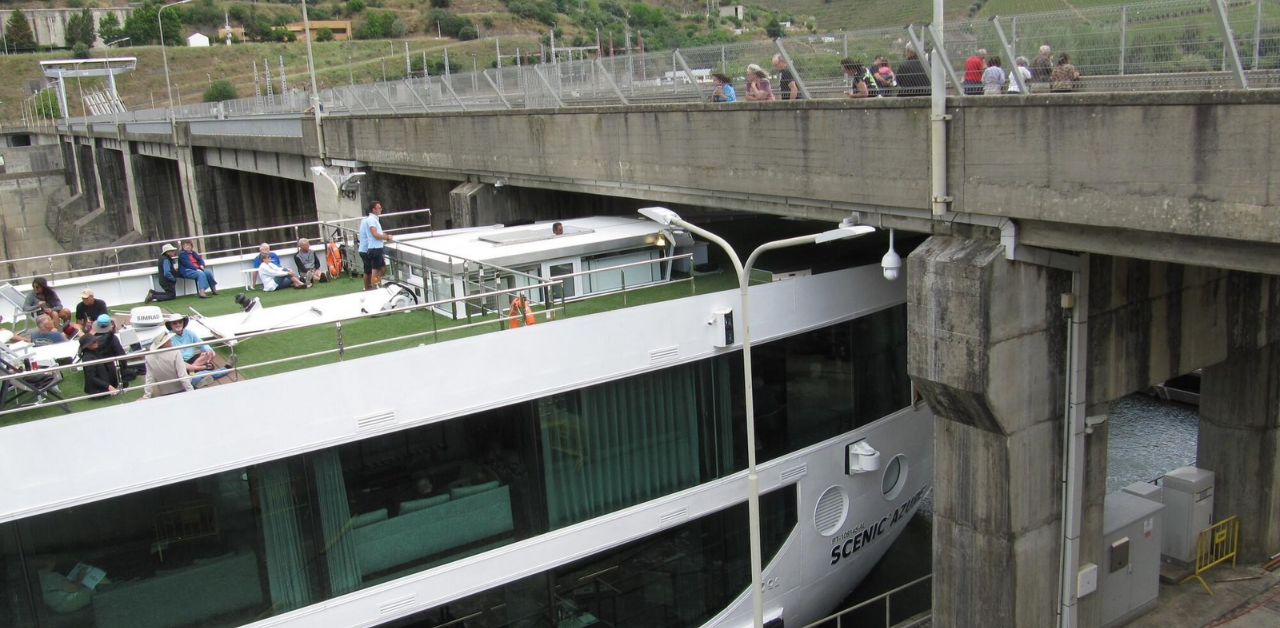
Some offer plenty of clearance. Others leave remarkably little room between the water’s surface and the underside of the bridge.
And unlike an automobile, a river cruise ship can’t simply take a different road.
So how does a multi-deck vessel fit underneath?
The ship itself is designed to change its profile.
Many European river cruise ships feature retractable wheelhouses, the enclosed structures from which the captain navigates.
When approaching a particularly low bridge, the wheelhouse can be lowered into the ship, reducing its overall height above the waterline.
Depending on the vessel’s design, the captain may be able to continue navigating from the lowered position.
But the wheelhouse isn’t the only structure that can move.
Sun deck railings may fold down, canopies may retract, and certain deck furnishings or fixtures can be moved or secured below the height required for passage.
These adjustments allow the vessel to temporarily reduce its overhead profile.
There’s another important factor: The higher the river rises, the less clearance there is beneath a fixed bridge.
That might seem counterintuitive. After all, more water sounds like a good thing for a ship.
But while higher water can provide additional depth beneath the hull, it also brings the ship closer to the bridge overhead.
Conversely, lower water may increase bridge clearance while creating problems with navigable depth.
This is one reason river conditions require such careful monitoring.
Passengers may occasionally find that the sun deck is temporarily closed while the crew prepares the ship for a low bridge. It’s a practical safety measure and a fascinating glimpse into the engineering behind river cruising.
4. River Cruise Rafting: When Ships Share a Dock
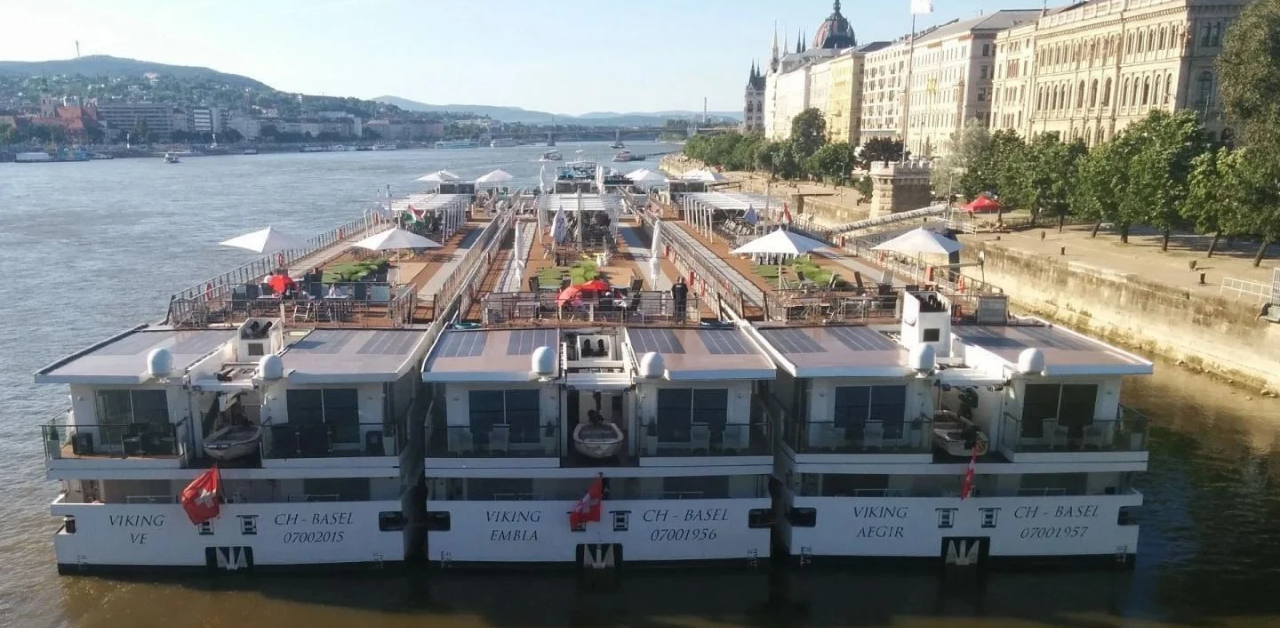
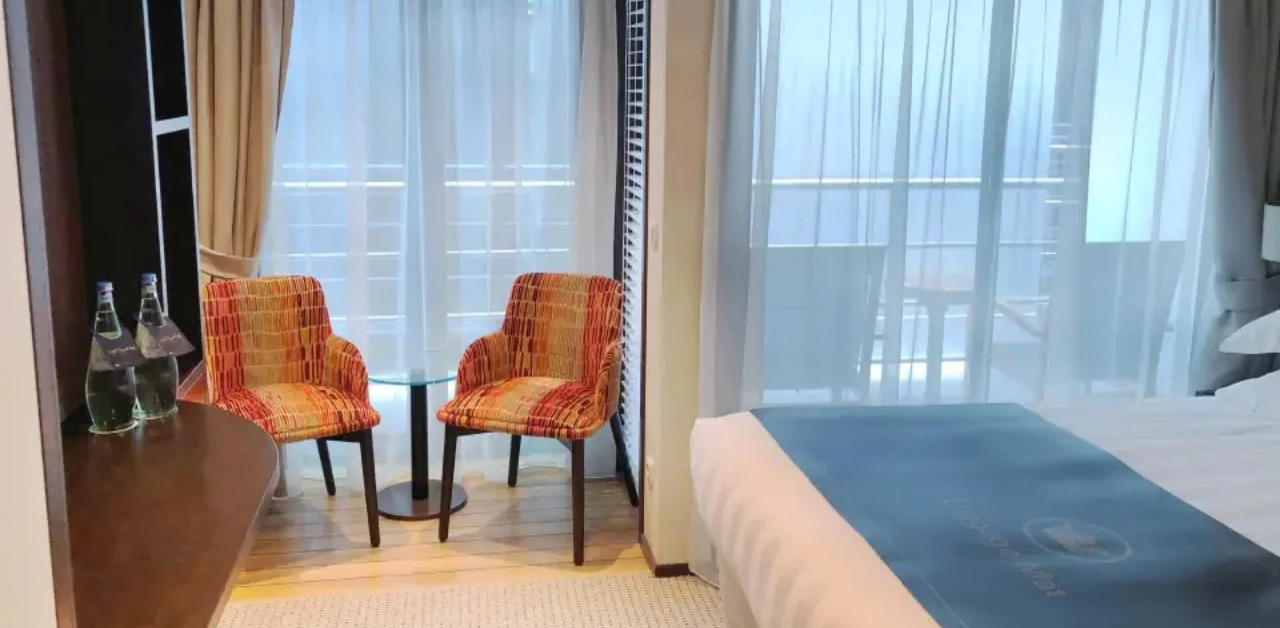
Imagine waking up in your river cruise stateroom, opening the curtains, and discovering another cruise ship directly outside your window.
Not another ship passing by.
Another ship tied up just a few feet away!
Welcome to river cruise rafting.
In popular European ports, there may be more river cruise vessels arriving than there are available docking positions directly along the riverbank.
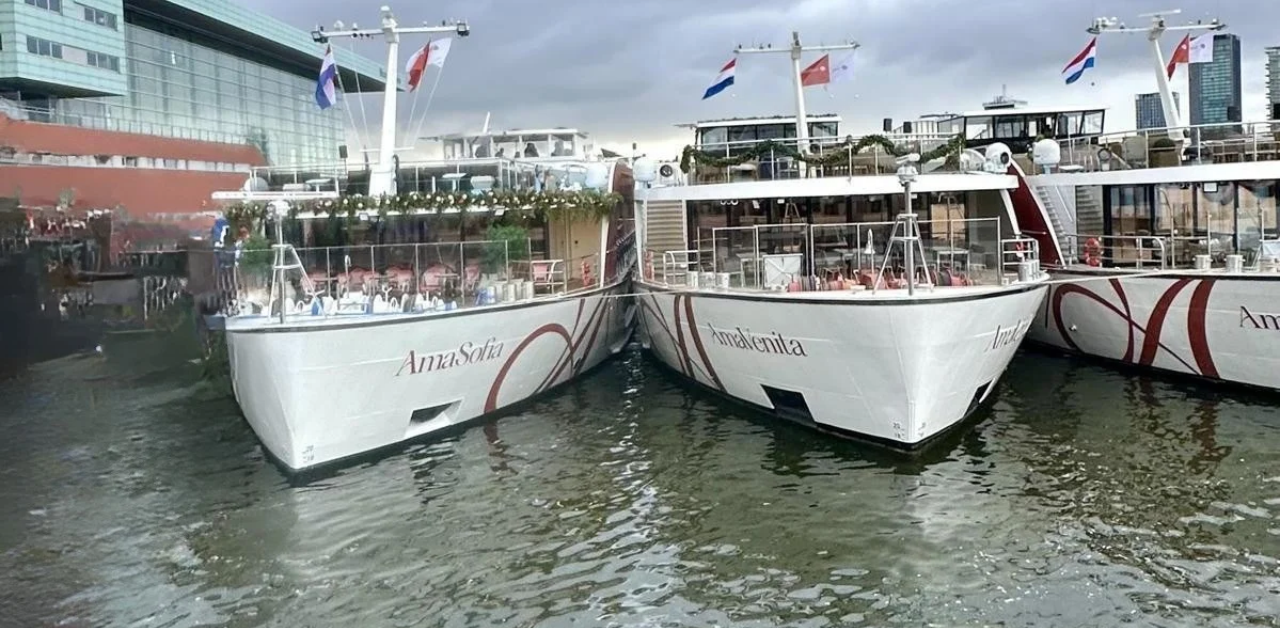
Rather than each ship having its own section of waterfront, vessels may moor alongside one another.
The ship closest to shore ties up at the dock, and another ship secures alongside it. Sometimes, multiple ships may be rafted together.
Here’s where things become especially interesting.
If your ship is on the outside of the group, you may need to cross through another cruise ship to reach shore.
Depending on the vessels and docking arrangements, passengers might walk across connecting gangways, through a reception area, or along a designated upper-deck route.
It’s a perfectly normal aspect of river cruising, although it can be quite surprising the first time you experience it.
Rafting can also temporarily affect your stateroom view.
Instead of looking out across the river, you may find yourself looking directly toward the windows of another vessel.
The good news is that this is generally a temporary docking arrangement rather than something you’ll experience throughout your entire voyage.
Rafting is a practical solution to limited waterfront space, particularly in busy ports where river cruise ships, sightseeing vessels, and commercial traffic all compete for access.
It also explains why the exact docking location of a river cruise ship may not always be known far in advance.
5. Provisioning a Floating Hotel: Where Does Everything Come From?
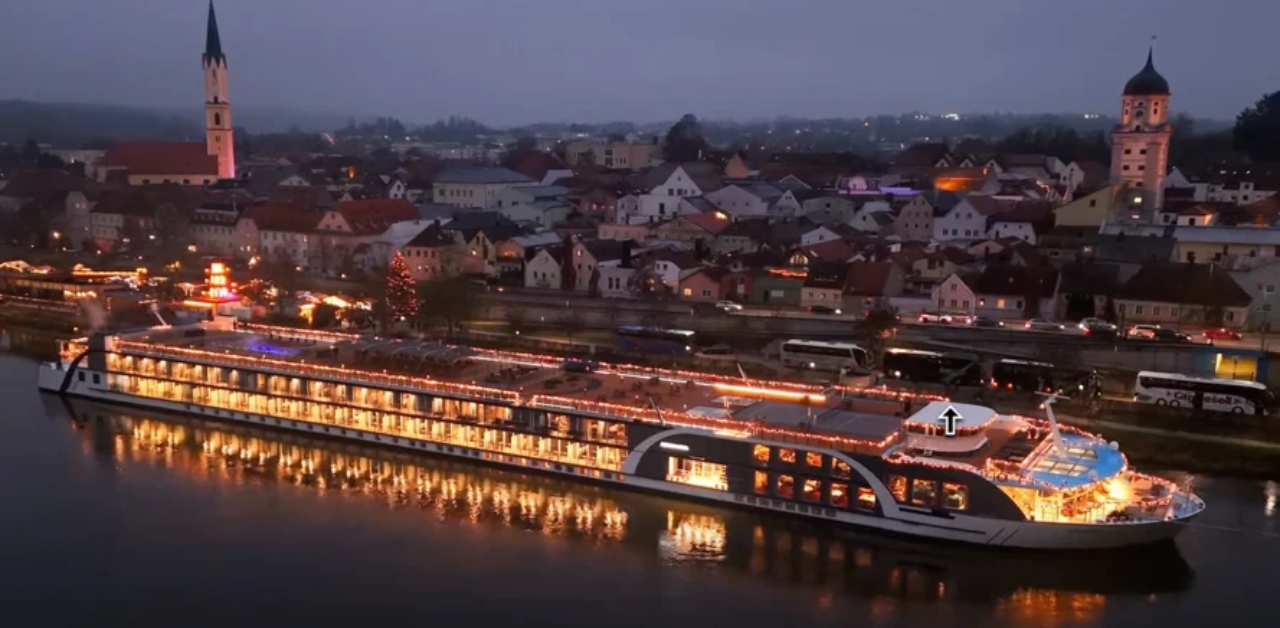
Think about everything required to operate a hotel.
Fresh food, beverages, linens, toiletries, cleaning supplies, maintenance equipment, and countless other necessities.
Now imagine that hotel moves to a different city almost every day.
That’s the logistical challenge facing a river cruise ship.
Unlike a traditional hotel, which can receive deliveries at the same loading dock every morning, river cruise ships must coordinate their supply deliveries around an ever-changing itinerary.
Fresh produce, meats, seafood, baked goods, and other provisions may be delivered at designated ports along the route.
These deliveries require advance planning.
Suppliers need to know where the vessel will be docked, when it will arrive, what quantities are needed, and how the provisions can be safely transferred aboard.
Storage space is limited compared with that of a large ocean cruise ship or land-based hotel.
Refrigerated and frozen storage, dry-goods areas, and onboard inventory must be managed carefully to maintain food quality and ensure sufficient supplies between deliveries.
And food is only part of the equation.
Clean linens, guest amenities, housekeeping materials, and other operational supplies must also be accounted for. Laundry may be handled aboard or through shoreside services, depending on the ship and cruise operator.
Waste management is another important logistical responsibility. Ships must arrange appropriate disposal of garbage, recyclables, and other waste through designated shoreside facilities in accordance with applicable regulations.
All of this happens while guests are enjoying breakfast, heading out on excursions, or relaxing in the lounge.
The goal is simple: Keep the floating hotel operating smoothly, even though its location is constantly changing.
6. Preparing for Each New Destination
One of the great pleasures of a European river cruise is arriving in the heart of a new destination, often within walking distance of historic neighborhoods, shops, cafés, and famous landmarks.
But those arrivals don’t happen without considerable advance coordination.
Before a ship reaches its next port, docking arrangements must be confirmed, local service providers coordinated, and shore excursion schedules reviewed.
In many destinations, cruise operators work with local guides and transportation providers who meet the vessel when it arrives.
That may involve arranging motorcoaches for excursions farther inland, coordinating walking tour groups, or planning transportation for guests with specific mobility needs.
Timing is particularly important.
If a ship is scheduled to depart at a certain hour, excursions must be planned with enough time for guests to return, board safely, and prepare for departure.
River traffic, lock schedules, docking restrictions, and local operating conditions can all influence the day’s timeline.
Sometimes, a ship may even continue sailing while guests are enjoying an excursion, meeting them later at a different docking location.
This allows cruise operators to coordinate sightseeing with the vessel’s navigation schedule.
For example, guests might depart by motorcoach to visit a historic destination while their ship continues along the river, then rejoin it farther downstream.
It’s an interesting example of how river cruise itineraries combine transportation planning with the guest experience.
And because European river ports can be busy, a vessel’s exact berth may change, sometimes with relatively little notice.
That flexibility is one of the reasons cruise operators coordinate closely with local port authorities and service providers throughout the voyage.
7. When the River Changes the Plan
For all the engineering and careful preparation involved, there’s one factor that no river cruise operator can control: Mother Nature.
River levels change throughout the year in response to rainfall, snowmelt, drought, and other environmental conditions.
And both high and low water can present challenges.
When water levels become too low, a vessel may not have sufficient depth beneath its hull to safely navigate certain sections of a river.
When water levels become too high, bridge clearance can become a problem, even for ships equipped with retractable wheelhouses and folding deck structures.
High water can also bring stronger currents, navigation restrictions, or temporary closures of certain waterways.
River conditions aren’t the only potential disruptions.
Locks may experience mechanical problems or scheduled maintenance. River traffic can create delays, and local restrictions may affect docking or navigation.
When these situations occur, cruise operators must evaluate the available options.
Depending on the circumstances, adjustments may include revised arrival times, alternate docking locations, modified excursions, additional motorcoach transportation, or changes to the planned route.
In more significant situations, guests may need to transfer between ships positioned on opposite sides of an unnavigable section of river.
This arrangement, sometimes called a ship swap, allows a journey to continue when two appropriately positioned vessels are available, although it may require guests to repack and move their belongings.
Not every cruise line or itinerary can accommodate a ship swap, and more substantial changes or cancellations may sometimes be necessary.
These situations are not everyday occurrences, but they’re an important reality of traveling on natural waterways.
It’s also why we encourage travelers to approach river cruising with a degree of flexibility.
A European river cruise offers extraordinary opportunities to experience the continent, but the rivers themselves ultimately influence how those journeys unfold.
8. The Remarkable Work Behind a Relaxing River Cruise
From sophisticated navigation systems and enormous river locks to retractable wheelhouses and carefully coordinated port operations, European river cruising involves far more than simply sailing from one beautiful destination to another.
Every journey brings together engineering, logistics, local knowledge, and thoughtful planning.
And that’s part of what makes river cruising so fascinating.
While guests enjoy beautiful scenery, memorable meals, and opportunities to explore Europe’s historic cities and charming villages, an extraordinary amount of work is happening behind the scenes.
Understanding these details can give you an entirely new appreciation for the experience.
The next time you watch a river cruise ship enter a lock, pass beneath a low bridge, or dock alongside another vessel, you’ll have a better understanding of the remarkable systems that make it all possible.
Ready to Experience European River Cruising for Yourself?
Whether you’re considering your very first European river cruise or you’re already dreaming about your next journey, choosing the right itinerary, cruise line, and ship can make a meaningful difference in your overall experience.
That’s where we come in.
We’re David and Jennifer Geddings of Dapper Dreams Travel By The Geddings, experienced travel advisors with specialized certifications from many of Europe’s leading river cruise lines.
We combine professional expertise with firsthand travel experience to help you explore your options and make informed decisions about your vacation.
From selecting the right river and itinerary to comparing stateroom categories, considering pre- and post-cruise stays, and arranging important travel details, we’re here to help you plan with confidence.
Whether it’s your first river cruise or your fifth, we’d love to help you discover where Europe’s remarkable waterways could take you next.
Connect with us below to Plan A Trip or Schedule A Complimentary Vacation Consultation and start planning your next European river cruise.
You Can Start Planning By Visiting Us At:
GeddingsTravel.com and clicking Plan A Trip or Vacation Consultation Call.
You can also follow us for cruise insights, travel tips, and inspiration:
Facebook
https://www.facebook.com/DapperDreamsTravelTheGeddings
Instagram
https://www.instagram.com/DapperDreamsTravelTheGeddings
YouTube
https://www.youtube.com/@DapperDreamsTravelTheGeddings